
GULFblue.it
RONDINELLI ClassicSportsCars
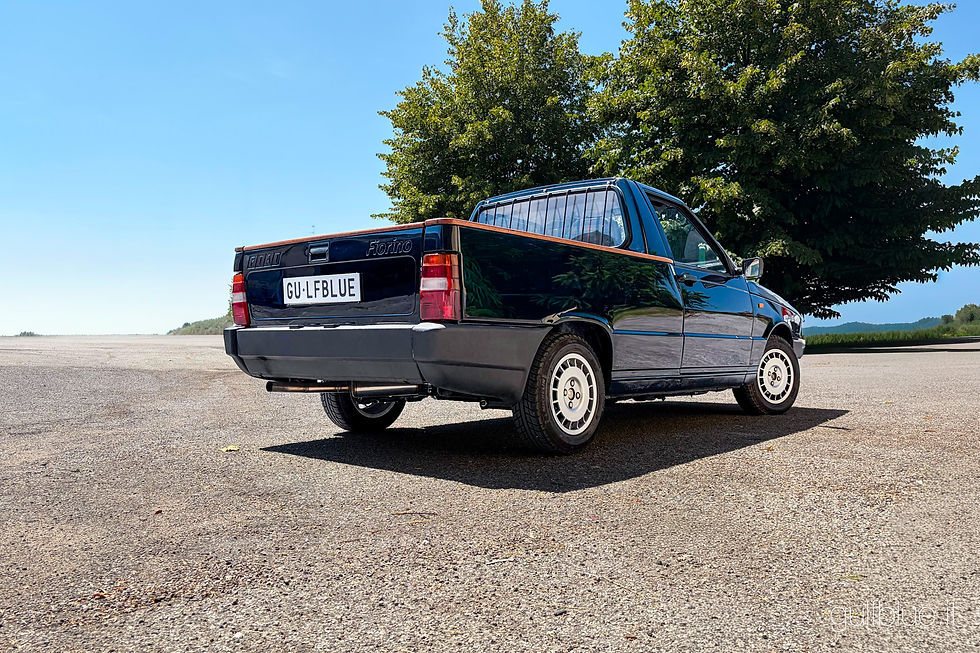
Fiat Fiorino "RIVA" 1300 pick-up, Blu Lancia, 1990
Esemplare unico, restauro integrale e personalizzazione di alto livello con motore preparato e finiture in vero teak. |
Unique example, fully restored and high level customization with prepared engine, real teak wood.


Prezzo | Price: 13.500 Euro
(English text below)
Chi meglio del proprietario può descrivere questo progetto? Ecco una parte dell’articolo pubblicato su Automobilismo d’Epoca di Aprile 2019.
Il restauro personalizzato, quello che oggi viene comunemente chiamato RestoMod, mi ha sempre allarmato ma anche incuriosito. Intendiamoci, sono un profondo e appassionato difensore dell’originalità e del restauro conservativo o, se proprio è inevitabile, del restauro completo ma fatto a regola d’arte. Eppure il desiderio peccaminoso di personalizzare la propria automobile, renderla unica e inconfondibile, tagliata su misura, è da sempre presente in me come anche, penso, nel profondo di ogni collezionista, pur se spesso ben mimetizzato. E così dopo due auto e due motociclette storiche perfettamente restaurate nel più completo rispetto dell’originalità, ho pensato che fosse giunto il momento di concedermi il lusso della trasgressione. Perché, per dirla con Oscar Wilde, si può resistere a tutto tranne che alle tentazioni. Su quale auto però potevo dirigere le mie attenzioni? Non certo su una storica di valore, non tanto economico quanto iconico: sarebbe stato un delitto troppo efferato. Ci voleva un’auto di nessun pregio, umile, dal destino segnato, quello cioè di diventare un cubo metallico da riciclo. Insomma, una cenerentola da riportare in vita e valorizzare donandole un nuovo appeal. Guardando gli annunci online, mi imbatto in un raro Fiorino Pick Up a benzina: è del ’90, ha il 1.300 cc di origine brasiliana, un gran bel motore a corsa (quasi) corta con l’albero a camme in testa. I pick up mi sono sempre piaciuti, quelli americani degli anni ’50 sono meravigliosi ma eccessivi per le nostre strade. Il Fiorino invece è piccolo, maneggevole, senza pretese e simpatico quanto basta. Questo è piuttosto malmesso, ma sembra appetibile: si trova a Savona, decido di andare a vederlo. Arrivato sul posto mi accorgo che non mi ero sbagliato: il Fiorino è allo stremo, anni di lavoro pesante e diversi padroni lo hanno sfinito, ma la struttura è sana ed è completo. Decido di acquistarlo ad un prezzo poco più che simbolico, pari al costo del trapasso. Il progetto RestoMod può partire.
Più che di restauro bisognerebbe parlare di costruzione. Il progetto prende vita man mano che ci si lavora, ma con un approccio filosofico preciso: libero sfogo alla creatività, però all’insegna del buon gusto e senza esagerazioni. Decido prima di tutto di affidarmi a chi sa il fatto suo. Per vicinanza affettiva e familiare il punto di riferimento scelto è RS Historics, covo di abili restauratori e preparatori di auto storiche da competizione. Il Fiorino infatti sarà elegante ma grintoso, con molto più pepe di quando è nato. A loro viene affidato il compito dello smontaggio iniziale, del restauro della ciclistica, del riassemblaggio e collaudo finale.
Si comincia con la separazione completa di carrozzeria e meccanica. La scocca nuda viene portata in carrozzeria. La situazione si presenta piuttosto difficile: i fondi sono compromessi, il pianale di carico è divorato quasi completamente dalla ruggine, le sponde laterali e i parafanghi posteriori con gli attacchi degli ammortizzatori hanno mille ammaccature, dal fondo dell’abitacolo si vede la strada. I longheroni però sono intatti, il vano motore è perfetto, la struttura portante è salva. Vengono quindi rifatti i fondi e ribattute le ammaccature, ma si decide di sostituire porte, parafanghi anteriori e cofano perché il ripristino di quelli originali sarebbe costato molto di più. La sponda posteriore è ormai inservibile, per fortuna ne troviamo una usata in condizioni decenti. Fatta la lattoneria, si passa alla finitura. Per la gioia del carrozziere il colore scelto è il classico blu Lancia, il Lechler 1332 della Fulvia Coupé: delicatissimo ma bellissimo, secondo me il più bel colore in assoluto per un’automobile.
Il motore richiede un discorso a sé. Il monoalbero brasiliano si presta bene alle elaborazioni, nella versione 1050 cc ha dato in passato, e continua a dare oggi nelle gare storiche, risultati straordinari. La versione 1300 cc si presta meno perché ha la corsa più lunga, ma in compenso se ne avvantaggia l’elasticità di marcia. Il motorista interpellato è Assunto Ambrosone, noto da tempo nell’ambiente dei rally ed esperto tra le altre cose di motori Fiat. Con lui scegliamo pistoni e bielle speciali e troviamo e montiamo un raro collettore d’aspirazione Alquati, adatto ai due doppi carburatori Weber da 40 che dovranno assicurare la brillantezza desiderata. Albero a camme adeguato, montaggio accurato e lucidatura ed equilibratura perfette completano il quadro. Risultato? Quasi 95 cavalli!
La ciclistica viene completamente rinnovata, perché anche in questo caso la sostituzione risulta essere più conveniente della riparazione. Pinze e dischi freno anteriori vengono sostituiti con quelli della Uno Turbo, la scatola guida revisionata e gli ammortizzatori sostituiti con dei Monroe più duri.
L’arredo interno dell’abitacolo è fonte di numerose meditazioni. Prima di tutto la strumentazione di bordo: va senz’altro sostituito l’orribile cocktail analogico-digitale d’origine, con mille spie e un inutilissimo ed enorme orologio. L’ortodossia filologica da rispettare è quella di restare in casa Fiat, prendendo il meglio del disponibile. Scelta facile ed immediata: gli strumenti della 124 Spider sono bellissimi, classici, completi e ben visibili nonché della giusta dimensione. Recuperati ad un mercatino, vengono puliti e revisionati. I due principali, tachimetro e contagiri, sono ospitati nel guscio originale, svuotato di tutto il superfluo e chiuso con una piastra di alluminio in cui vengono ricavati i due alloggi. I tre strumenti secondari, manometro olio, termometro acqua e indicatore livello benzina devono invece trovare una nuova collocazione. Disegno quindi un cruscottino ad hoc, da sistemare sulla plancia, di fronte al posto guida. Ne faccio un campione in balsa che porto da un artigiano specializzato nella lavorazione del metallo per arredo, ma che all’occorrenza si diletta anche nella costruzione di serbatoi e parafanghi per motociclette speciali, soprattutto café racer. Il risultato mi appaga, rifinito in nero opaco raggrinzante sembra preso pari pari da una Ferrari 250 GTL o meglio da una 250 Le Mans… I rivestimenti di sedili e pannelli porta devono, sottolineo devono, essere in pelle, scelta di un tono di blu che ben si accompagni con il blu Lancia dell’esterno. Come è possibile infatti rinunciare a quella morbidezza e a quel profumo inebriante, soprattutto se mischiato alle inevitabili esalazioni di benzina, che ti avvolge quando entri nell’abitacolo? Per non esagerare però la parte centrale dei sedili e una fascia sul pannello porta è corretto che siano in stoffa, meglio se di un bel tartan blu e verde con sottili righe rosse, giusto per ravvivare un po’ l’ambiente. Per pomelli e maniglie si ritorna nell’universo Fiat: la scelta cade sulla dotazione della 500 F, nostra fida compagna di gioventù e impareggiabile nell’abbinare la spartana semplicità all’eleganza essenziale della lega d’alluminio. Ancora alluminio per il pomello del cambio e per le razze del volante con corona in legno. Sul pavimento una moquette, blu ovviamente, completa il tutto.
Il riassemblaggio si rivela più lungo del previsto. I piccoli problemi da risolvere sono migliaia, come sempre in questi casi, non ultimo l’impianto elettrico da rifare completamente e da potenziare per la presenza degli antinebbia anteriori e soprattutto della pompa elettrica della benzina. Ma alla RS Historics, Davide insieme al fido collaboratore Cesare risolvono tutto con grande perizia, dimostrando che esperienza e inventiva sono una componente fondamentale del loro lavoro. Terminato il quale, tolto il Fiorino dal ponte e al momento della fatidica prima accensione, ci accorgiamo subito della clamorosa inadeguatezza dell’assetto: i cerchi in lega OZ Racing, per quanto della modesta dimensione 6.00x13 utile per ospitare gli pneumatici regolari 165x13, evidenziano ancora di più una altezza da terra spropositata, che fa sembrare il Fiorino abbarbicato sui trampoli. Detto, fatto: molle più corte (ma non troppo) all’avantreno, due foglie in meno al balestrone posteriore, ammortizzatori ritarati, adeguamento di convergenza, campanatura e camber e il risultato è raggiunto: occhio contento, guida esaltante.
Non resta che il tocco finale. Il falegname è già stato allertato ed è pronto per dare il suo prezioso contributo. Lavora magistralmente lastre di durissimo teak africano, quello utilizzato per le imbarcazioni e anche per le piscine all’aperto: realizza il fondo del piano di carico, i pannelli laterali e i bordi superiori del cassone. Verniciato e ben massaggiato con l’olio di teak, il rivestimento in legno dona subito al Fiorino un bel tocco di personale eleganza e compiutezza. Il risultato complessivo piace a tutti, intenditori e non, cultori dell’auto storica e semplici curiosi. Guidandolo in mezzo al traffico la sensazione è strana: desta quasi più ammirazione e curiosità di una Giulietta Spider. Forse perché si è ormai assuefatti alla roadster d’epoca, mentre si è sorpresi nello scoprire che anche un umile e vecchio mezzo di lavoro può diventare un oggetto da desiderare. E anche da ammirare con stupore: basta effettuare un fulmineo sorpasso in seconda o terza a 7.500 giri per captare lo sguardo perso e incredulo del porschista che se la stava prendendo un po’ troppo comoda.
Il Fiorino Riva regolarmente targato e revisionato, documentazione del restauro e dei lavori eseguiti, visibile previo appuntamento a Lecco.
_______________________________
Who better than the owner to describe this project? Here's an excerpt from the article published in Automobilismo d'Epoca in April 2019.
Custom restoration, commonly known today as RestoMod, has always alarmed but also intrigued me. Let's be clear: I'm a profound and passionate advocate of originality and conservative restoration, or, if it's absolutely necessary, of complete but expertly crafted restoration. Yet the sinful desire to personalize one's car, making it unique and unmistakable, tailor-made, has always been present in me, as it is, I think, deep within every collector, even if it's often well-camouflaged. And so, after two perfectly restored classic cars and two motorcycles, completely respectful of their originality, I thought the time had come to indulge in the luxury of transgression. Because, as Oscar Wilde put it, you can resist everything except temptation. But which car could I turn my attention to? Certainly not on a valuable historic car, not so much cheap as iconic: that would have been too brutal a crime. What was needed was a car of no value, humble, destined to become a recycled metal cube. In short, a Cinderella to be brought back to life and enhanced, giving it new appeal. Browsing online classifieds, I came across a rare gasoline-powered Fiorino Pick Up: it's from 1990, has a 1,300 cc engine of Brazilian origin, a truly beautiful (almost) short-stroke engine with an overhead camshaft. I've always liked pick-ups; the American ones from the 1950s are wonderful but excessive for our roads. The Fiorino, on the other hand, is small, maneuverable, unpretentious, and just the right amount of cute. This one is in rather shabby condition, but it looks desirable: it's in Savona, and I decide to go and see it. Arriving on site, I realize I wasn't mistaken: the Fiorino is exhausted, years of hard work and several owners have worn it down, but the structure is sound and complete. I decide to purchase it at a price little more than symbolic, equal to the cost of its transfer. The RestoMod project can begin.
Rather than restoration, it should be called construction. The project comes to life as work progresses, but with a precise philosophical approach: free rein to creativity, but in good taste and without exaggeration. I decide first of all to trust someone who knows what they're doing. Due to emotional and family ties, the chosen point of contact is RS Historics, a haven of skilled restorers and preparers of classic racing cars. The Fiorino will indeed be elegant yet bold, with much more pep than when it was born. They are entrusted with the task of initial disassembly, restoration of the chassis, reassembly, and final testing.
We begin with the complete separation of the bodywork and mechanicals. The bare body is taken to the body shop. The situation was quite difficult: the underbody was damaged, the cargo area was almost completely devoured by rust, the side panels and rear fenders with the shock absorber mounts had countless dents, and the road was visible from the floor. However, the side members were intact, the engine compartment was perfect, and the load-bearing structure was safe. The underbody was redone and the dents were repaired, but it was decided to replace the doors, front fenders, and hood because restoring the originals would have cost much more. The rear panel was now unusable, but fortunately we found a used one in decent condition. Once the bodywork was done, the finishing touches were applied. To the body shop's delight, the chosen color was the classic Lancia blue, the Lechler 1332 from the Fulvia Coupé: delicate but beautiful, in my opinion the most beautiful color ever for a car.
The engine deserves a separate mention. The Brazilian single-cam engine lends itself well to tuning; the 1050cc version has delivered extraordinary results in the past, and continues to deliver today in historic races. The 1300cc version is less suitable because of its longer stroke, but it does benefit from greater flexibility. The engineer we consulted was Assunto Ambrosone, a long-time rally expert and expert on Fiat engines, among other things. With him, we selected special pistons and connecting rods and found and installed a rare Alquati intake manifold, suitable for the two twin 40 Weber carburetors that would ensure the desired brilliance. A suitable camshaft, careful assembly, and perfect polishing and balancing completed the package. The result? Nearly 95 horsepower!
The chassis was completely revamped, as replacement proved to be more cost-effective than repair. The front brake calipers and discs were replaced with those from the Uno Turbo, the steering box was overhauled, and the shock absorbers were replaced with harder-running Monroe ones.
The interior of the passenger compartment is a source of much reflection. First and foremost, the instrumentation: the hideous original analog-digital cocktail, with its myriad warning lights and a useless, enormous clock, definitely needs to be replaced. The philological orthodoxy to be respected is to stay true to Fiat, choosing the best available. An easy and immediate choice: the 124 Spider's instruments are beautiful, classic, complete, and clearly visible, as well as the right size. Recovered from a flea market, they are cleaned and overhauled. The two main instruments, the speedometer and tachometer, are housed in the original casing, emptied of all superfluous parts and closed with an aluminum plate that houses the two housings. The three secondary instruments, the oil pressure gauge, water temperature gauge, and fuel level indicator, need to find a new home. Therefore, I designed a custom instrument panel to be placed on the dashboard, in front of the driver's seat. I make a balsa wood sample and take it to a craftsman who specializes in metalworking for furniture, but who also occasionally dabbles in building tanks and fenders for special motorcycles, especially café racers. I'm pleased with the result: finished in wrinkled matte black, it looks like it came straight from a Ferrari 250 GTL, or rather, a 250 Le Mans. The seat and door panel upholstery must—and I emphasize must—be leather, chosen in a shade of blue that pairs well with the Lancia blue exterior. How could you possibly give up that softness and that intoxicating scent, especially when mixed with the inevitable gasoline fumes, that envelops you as you enter the cockpit? To avoid overdoing it, however, the center of the seats and a stripe on the door panel should be fabric, preferably a nice blue and green tartan with thin red stripes, just to liven things up a bit. For the knobs and handles, we return to the Fiat universe: the choice fell on the 500 F, our trusty companion from our youth and unparalleled in its combination of spartan simplicity and the essential elegance of aluminum alloy. Aluminum is also used for the gear knob and the wooden-rimmed steering wheel spokes. A carpeted floor, blue of course, completes the look.
Reassembly proved to be longer than expected. There were thousands of small issues to resolve, as always in these cases, not least the electrical system, which needed to be completely redone and upgraded for the front fog lights and, especially, the electric fuel pump. But at RS Historics, Davide and his trusted collaborator Cesare solved everything with great expertise, demonstrating that experience and inventiveness are a fundamental component of their work. Once the Fiorino was off the lift and ready for the fateful first start, we immediately noticed the glaring inadequacy of the setup: the OZ Racing alloy wheels, despite their modest 6.00x13 size, sufficient to accommodate the regular 165x13 tires, further emphasized the excessive ride height, making the Fiorino appear to be perched on stilts. No sooner said than done: shorter (but not by much) springs at the front, two fewer leaves on the rear leaf spring, recalibrated shock absorbers, adjusted toe, camber, and camber, and the result was achieved: a happy eye, a thrilling drive.
All that remains is the finishing touches. The carpenter has already been alerted and is ready to make his invaluable contribution. He masterfully crafts slabs of extremely hard African teak, the kind used for boats and even outdoor swimming pools: he creates the floor of the cargo area, the side panels, and the upper edges of the cargo box. Varnished and carefully massaged with teak oil, the wood trim immediately gives the Fiorino a beautiful touch of personal elegance and completeness. The overall result pleases everyone, connoisseurs and non-connoisseurs, classic car enthusiasts and the merely curious. Driving it in traffic is a strange sensation: it almost arouses more admiration and curiosity than a Giulietta Spider. Perhaps because you've become accustomed to vintage roadsters, you're surprised to discover that even a humble, old work vehicle can become an object of desire. And also to be admired with amazement: just perform a lightning-fast overtake in second or third gear at 7,500 rpm to catch the lost, incredulous look of the Porsche driver who was taking it a little too easy.
The Fiorino Riva is road registered, inspection done, ready too drive: it can be inspected by appointment in Lecco.